
Gridfinity Storage
Gridfinity combines repeating base grids with rearrangeable storage modules to give parts, supplies, and small tools clear places. When the contents change, replace, move, or recombine modules rather than redesigning the whole drawer.
It is one approach to workshop storage, not a system that needs to cover every object or working area.
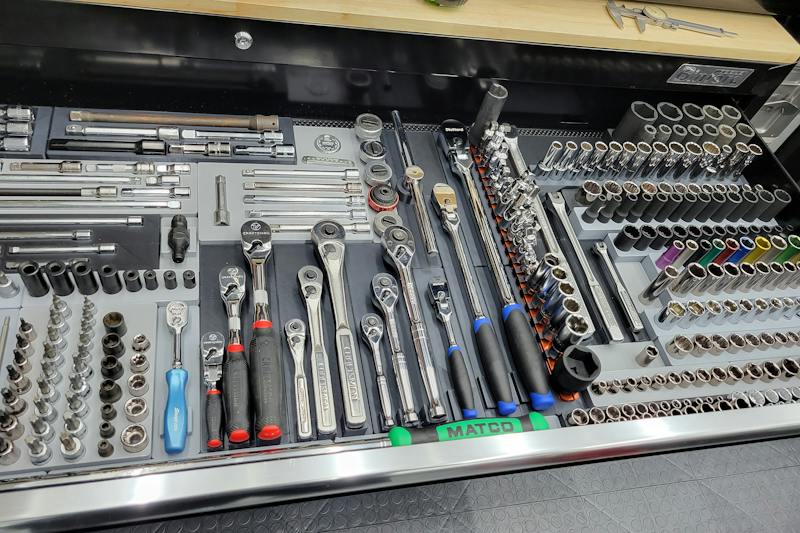
Reference example: Greg Acosta's toolbox drawer organisation, EngineLabs, 2024. The photograph shows an actual module layout, not a RONZ product or completed project.
The base locates; the modules fit the objects
Baseplates provide consistent positions. Bins, tool holders, and purpose-made modules accommodate different objects. Modules occupy one or more grid units and can be combined as needed.
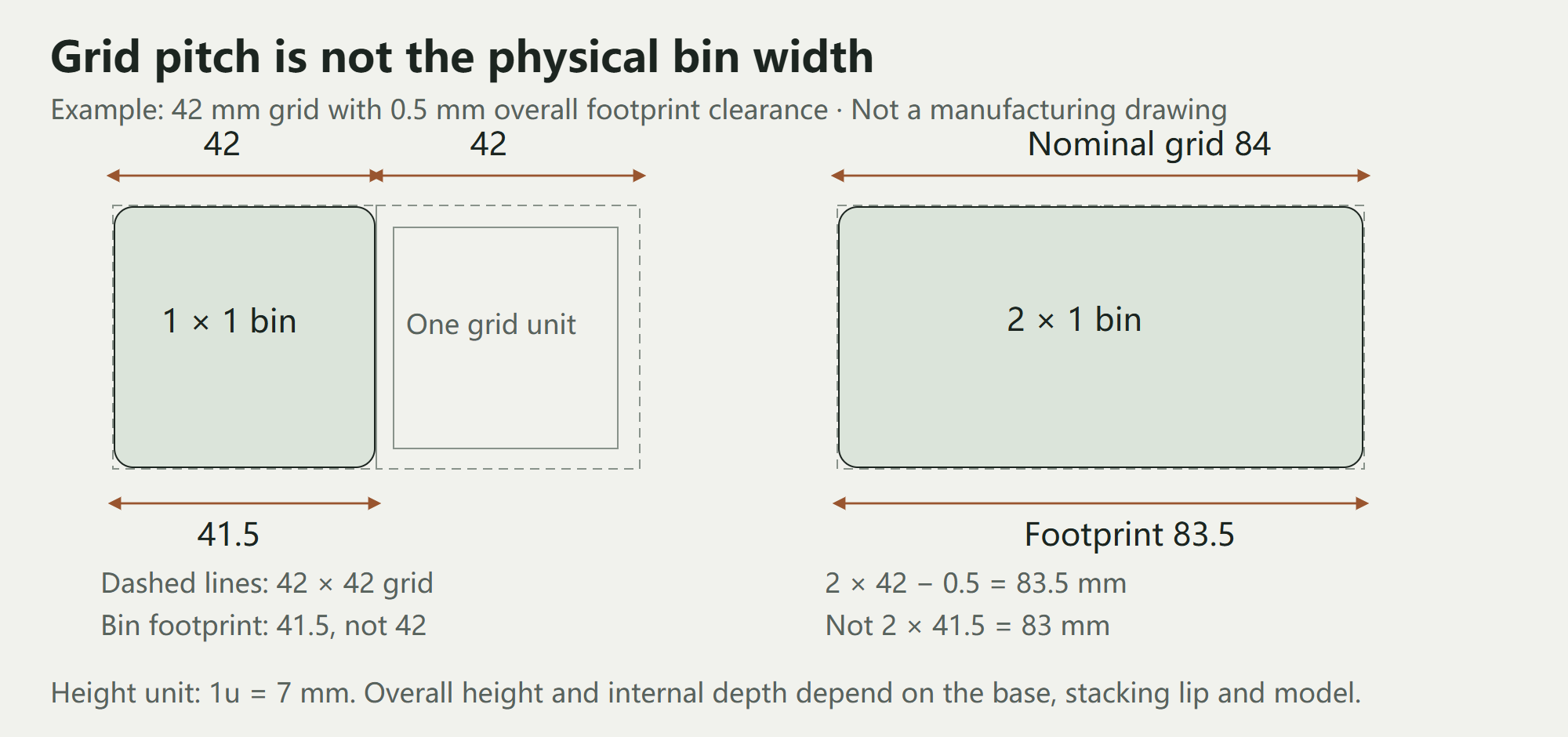
Common compatibility references use a 42 × 42 mm grid and a 7 mm height unit. Gridfinity Rebuilt's interface source distinguishes the grid from the actual base footprint: a single-unit base is 41.5 × 41.5 mm, while the grid pitch is 42 mm.
42 mm is neither the physical outside width of every module nor its internal clearance. Implementations with 0.5 mm overall footprint clearance calculate a multi-unit footprint as n × 42 − 0.5 mm: two units measure 83.5 mm, not 2 × 41.5 mm. Check the actual model and trial fit to confirm which footprint rule it uses.
7 mm is a height unit, not internal depth. The base, wall thickness, stacking lip, labels, and lids affect usable and overall height. Check the specific model's overall dimensions when planning a drawer.
Start with small items in drawers
Drawers provide stable boundaries and a useful place to group small items. Measure usable internal width, depth, and height first, then select modules around the size, quantity, and handling of the objects.
| Check first | Then decide |
|---|---|
| Internal width, depth, clear height, and slide interference | Grid coverage and allowable module height |
| Actual object shapes and how they are picked up | Bins, shallow trays, dividers, or dedicated holders |
| Use frequency and relationship to projects | Module positions and combinations |
| Whether modules or objects need to be carried elsewhere | Magnets, fixings, or removable trays |
For example, a drawer with 300 × 220 mm of usable space can initially be planned as 7 × 5 complete grid units, with a nominal footprint of 294 × 210 mm. Account for the remaining space using the actual baseplate edges and drawer shape; do not assume a full grid will fit perfectly.
Trial a small baseplate area and representative modules. Confirm handling, drawer operation, and fit before extending the layout.
The work surface does not need a full grid
A work surface is first a place to work. Fixing baseplates across the whole surface can occupy working space and restrict larger or irregular objects.
Use Gridfinity at the edge for tools that stay there, or arrange modules in a project tray that can be moved as one unit. Clear the tray when the task changes; only items that need permanent positions should occupy the work surface.
Bigger objects do not automatically call for bigger grids
Large modules can technically span many grid units. That does not make a grid base the best choice for every large tool, box, or heavy object. Consider cabinets, shelving, and dedicated supports first where volume, span, or load-bearing stability matters; Gridfinity can still organise the smaller items within them.
How RONZ uses Gridfinity
RONZ aims to coordinate grids, pegboards, and cabinet frames within the same workshop: keep frequently used tools visible on the wall, put small loose items in drawers, and leave working space on the bench.
Gridfinity comes from an open design ecosystem; it is not a proprietary RONZ interface. Original projects, derived models, drawings, and accessories may have different licences. Check the licence of the specific files before downloading, modifying, or offering products; one project's licence does not apply to the entire ecosystem.